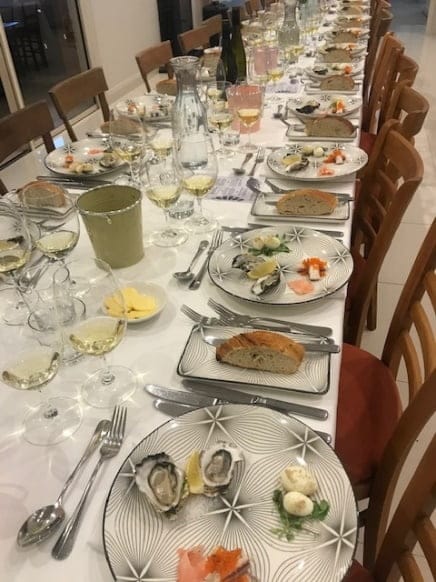
 With the raging bush fires (in other regions) at present, I ruled out Fumé Blanc wines straight away! We are all on edge hoping not to get any smoke taint on our grapes as we are just about to start picking.
Amber LeBeau – Spitbucket – attended the Wine Media Conference 2019 in the Hunter Valley
Published on February 8, 2020
It’s too much — the lost habitats and species. The homes and businesses devastated. Now there are reports that some Australian wine producers in the Hunter Valley and Adelaide Hills may lose an entire vintage due to smoke taint.
Picture that.
Even if you don’t work in the wine industry, imagine an entire year’s worth of your work wiped out. Think about all those steps, sweat and hours in the vineyards going up in smoke. Perhaps insurance and safety nets will help offset some of the financial losses. But nothing offsets a punch to the gut.
You still feel it. But you learn to manage it and move forward. This is what Australian winemakers are doing right now. However, they don’t have to do it alone.
So in the spirit of Yael Cohen’s Fuck Cancer movement, I encourage the wine community to #FuckTheFires and commit to supporting our brothers and sisters in the Australian wine industry.
There are numerous ways that people can help.
Consumers — Drink Australian Wine, especially from small family producers
Hunter Valley Wineries
Just a small assortment of the many tremendous Hunter Valley wineries that could use your support.
It begins and ends with you. Consumers who care and want to make an impact need to vote with their wallets. You need to ask for and actively seek out Australian wines at your local wine shops and restaurants.
While some producers may have lost their 2020 vintage, there are plenty of bottles of current 2016-2019 wines out in the market. The cash flow of moving those bottles through the supply chain and emptying backstocks will help cushion the blow of a down vintage in 2020. Find these bottles and drink up. This is the easiest thing that anyone can do to help the Australian wine industry.
I know this is tough in many markets–especially in places like the United States where the Australian “selection” is dominated by a handful of big names and mass-produced brands. While the supermarkets aren’t likely to change anytime soon, independent wine shops and restaurants can be more responsive. And, believe me, if customers start asking for more Australian wines, they will rise to meet the demand.
Importers and Distributors — Promote and expand your Australian portfolios
This is more of a personal plea to my American compatriots back home. Because even though we’re the largest wine import market by value, the perception of Australian wines for many US consumers is still of low-priced critter wines and fruit bombs. While those wines helped pave the way for Australian wines into the States, they certainly don’t reflect the realities of Australian wine today.
American consumers deserve the chance to know about things like cool-climate Pinot noirs from the Mornington Peninsula and Margaret River Chardonnays that are ages away from the tropical, butter bombs of the past.
Then there are the crackling Rieslings of Mudgee or the beauty of aged Hunter Valley Semillon. Not to mention the Hunter’s exciting foray into alternative varieties like Verdelho, Fiano and Vermentino as well as intriguing Shiraz-Pinot noir blends.
Lowe Zinfandel
David Lowe was inspired by the great Dry Creek Zins of Fred Peterson of Peterson Winery.
His Mudgee Zinfandel strikes me as a mix of the red-fruit & peppery spice of a Dry Creek Zin with the mouthfeel and texture of a ripe Paso wine.
While I do think that Zinfandel is the “craft beer” of American wine, it’s also made its way to Australia as a passion project of more than a few winemakers worth discovering.
In Orange, they’re exploring the potential of high elevation vineyards as well as carbonic maceration. All of which are tailor-made to capture the interest of the wanderlust Millennial market eagerly looking for something different.
There’s so much more to Australian wines than fruit and furry critters. Please, help give American consumers a chance to discover this.
Wine Shops & Restaurants — add more Aussie options to your selection
I know you guys are caught in the middle between what consumers are buying and what you can actually get from importers and distributors. But being caught in the middle means that you can also push at both ends.
Highlight your Australian wine selection by pointedly putting them in front of consumers. And let them know why you’re doing this. Something as simple as a line on a menu saying, “To support the wineries and families dealing with the effects of devastating fires, we proudly offer this selection of Australian wines for you to enjoy” goes a long way towards bringing awareness to consumers.
Of course, we want consumers to lead the way and dictate demand. But dictations often need a prompt to get going. Seize on that and give consumers a prompt to consider Australian wine. In chicken and egg scenarios, successful businesses are rarely the chicken. So take the lead and be proactive in your promotions.
Wine Writers and Influencers — Talk About Australian Wines
Sasha Degen and her mom, Jean, run a tiny winery dedicated to single-vineyard wines.
Sharon Parsons did a lovely write up on Degen during the 2019 Wine Media Conference in the Hunter Valley.
Yes, there’s so much exciting and interesting stuff out there in the world of wine to write about. But next month, next year and so on, all that exciting and interesting stuff is still going to be there. So mix things up!
I’m not saying that you need to turn your blog or social media feed completely over Australian topics. However, now is the time for us to turn the spotlight on Australia for something good.
Currently, when Australian topics come across newsfeeds, it’s almost always for something heartbreaking. The fires, the floods and drought. We don’t need to whitewash or sugarcoat the negatives. But we shouldn’t dwell on them either. Australia is so much more than just natural disasters and things that can kill you.
Let’s change the narrative by sharing the stories of dynamic Australian winemakers forging ahead. Let’s talk about how Australia is a microcosm for wine–combining the history of many of the world’s oldest vines and multi-generation family winemaking with innovation that is at the forefront of climate change and the future of the wine industry.
But most importantly, let’s make sure that in the minds and hearts of wine consumers that Australia doesn’t get left behind once the news cameras leave.
Wineries — Hold solidarity tastings featuring your wines and their Australian peers
The wine industry is unique in that while it’s a business and every winery is technically competing against each other; it’s also a community. There are too many other threats to our industry–declining interests by younger generations, neo-prohibitionism, government regulations, tariffs, unstable economies, climate change, hard seltzer and other beverages–that merit more concern.
Whether it’s across the street, across the country or globe, we’re all in this together. The health and success of all our businesses–wineries, shops, restaurants, writers, educators–depends on consumers being engaged and intrigued with wine.
That’s why it would be a fabulous idea for wineries in other regions to host “solidarity tastings” featuring their wines alongside their Australian counterparts.
This will not only highlight how interconnected the world of wine is but help deepen the understanding and appreciation of guests who could try Cab, Shiraz, Sauvignon blanc, etc. from a local favourite next to an expression of that grape from somewhere in Australia. But instead of being done as a competition, it’s done in the spirit of community–perhaps even to raise funds supporting relief efforts in Australia.
Cathy Huyghe and Rebecca Hopkins have a wonderful list of worthwhile organizations to support on their A Balanced Glass site.
Hospice du Rhone seminar mat
Events like the Hospice du Rhône do a great job of highlighting the community among winegrowers.
I remember being fascinated with how many Californian, French and South African winemakers attended this seminar. They were there to taste and ask questions of the panel from Barossa just like the rest of us.
This is a powerful message to send because, while this time it’s Australia, who knows which wine community will be next?
California, Washington, Canada and South Africa are certainly not strangers to devastating brush fires. Flooding, drought and mudslides are hitting European and South American wine regions with increasing frequency as well.
Even if you’re a sceptic about climate change causing these, there’s always the vagaries of devastating earthquakes like those that Chile, New Zealand and Italy have endured. This won’t be the first time that the wine community comes together for support and it certainly won’t be the last.
Why this matters
The timing and impetus for the industry to respond to the fires by supporting the Australian wine community couldn’t be more stark. The industry once again is wringing its hands over how to reach Millennials and Generation Z. But how many times do we need to be beaten over the head with the same messages?
Younger generations want to support businesses that stand for something. That share their values. That basically gives a damn.
So, here you go. Stand up. Give a damn. #FuckTheFires and let’s drink some Australian wine.
Planning a Wine and Food Dinner; the proof of the pudding… Bob’s Blog
“Just wondering if you can do the next dinner, the rest of the year is taken but you missed the Christmas dinner and there is just one spot left – February.” An offer I couldn’t refuse!
Like many of our friends in Pokolbin Wine Country, we have been involved in planning such dinners for years and the trick is to make them interesting. A wine region or a food-based theme, a travel-related or grape varietal based topic, something to help make it memorable.
With the raging bush fires (in other regions) at present, I ruled out Fumé Blanc wines straight away! We are all on edge hoping not to get any smoke taint on our grapes as we are just about to start picking.
Important in these dinners is the discussions that occur and knowledge shared not only about the wines and food but what is going on in our wine-growing district. At a critical time as this, the bushfires and what to do top the list of issues discussed.
By mid-February, we hopefully will be all picked and can relax a little. Too hot for any heavy reds so I have paid a visit to my cellar and found some Pinot Noir of interest plus some other similar weighted reds…I don’t want to give too much away just yet. The whites will be some aged Semillon plus other interesting similar styled wines. We usually start with some cold sparkling wines, so from two regions, I have that covered and an interesting white fortified to finish with.
Now for the food matching.
Food like wine is such an individual thing and really today there are only a few guiding rules when it comes to matching. The permutations and combinations are endless.
Gone are the days when Semillon is matched with oysters as a rule, white wine with white meat – say chicken and reds with red meat. That existed in the day when sherry was served before the meal. When I was working in the UK only the women got sherry the men drank scotch or gin (not to be wasted on the women!!!)
There was a period of total freedom “drink what you like with anything” was the go. Such a waste when good wine was spoilt when mismatched and visa versa. We, fortunately, have moved on from that.
So the trick is to try and bring the best out of the combination and this may take a little experimentation. With 25 people we are not going into too much depth with outstanding wines but good solid representative examples are to be served. The food needs to be able to carry and match the weight and not detract from the wines. I have in mind the food and wine matches but will need to have a quiet dinner at the restaurant beforehand, just to check. Dam.
The delicacy, strength and robustness of both the food and wine have to be considered. As Len Evans remarked “A light delicate white with a great beef stew would merely be mouthwash”.
With the wines, of course, dry before sweet and white before red is a given. It is important not to assume a wine is dry or sweet unless you know the producer well. At a recent dinner meeting of one group, three Zinfandels were served, all lovely examples however the middle one was almost port-like in its sweetness, very surprising. A good story behind its character made it interesting but possibly should have been last in the lineup. Best also to taste the wines before serving to make last-minute changes in the order of presentation.
The volume of wine consumed is modest at these functions. Generally, we get about 12 glasses to the bottle and we have four glasses with the entrée and four with the main. With the sparkling beforehand and a small serving of a fortified to finish just under a bottle per person is consumed. This then places the emphasis on the discussions, the memories of past vintages, the regional characteristics, the winemaking approaches, how the wine is travelling, the food itself and how it was prepared as well as how well it went with the wine and other related matters.
Now one critical issue for me is what to serve with dessert. Often a sweet table wine or fortified wine is brought out and enjoyed. I, on the other hand, prefer a dry sparkling wine with a sweet dessert. The sweet or fortified I believe is better suited to have with cheese. That, of course, opens a whole new field of enjoyment.
In the English tradition, Stilton cheese goes so well with a port wine style and in a similar way an Italian Gorgonzola with a twany or white port style. Some would prefer an older Hunter or Coonawarra Cabernet with the stronger blue cheeses and we often do this at our Legends wine lunches.
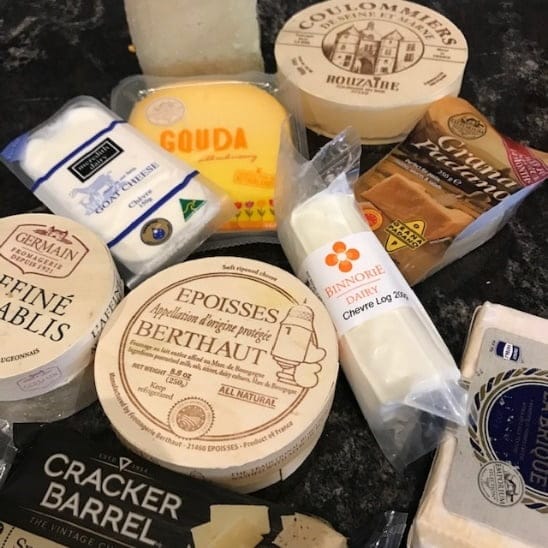 When it comes to pairing wine and cheese I have often been disappointed at dinners, lunches, and parties. The anything-goes principle can spoil both the taste of the cheese and enjoyment of the wine.
Just like food matching, in general, we should pair wines with cheeses of equal strength and intensity. So starting off with a sparkling wine, I think we should look for soft, creamy cheeses. How fortunate are we in the Hunter to have great examples from Hunter Belle and Binorie to choose from, not to forget the long-established Hunter Valley Cheese Factory. Brie, Camembert or Epoisses de Bourgogne are the classics of course. Pinot Noir and Beaujolais go well with these styles also.
Will Sauvignon Blanc ever recover from Len Evans comparing it to cats pee? In any event goats cheese and Feta with a good wine and garlic and herb flavoured if you want to mask the feline effect.
Being a producer of Sangiovese its interesting to see how well the Italian Parmigiano Reggiano and Pecorino go with this Chanti style wine. Something to do with the terroir maybe. Similarly, Manchego, that famous sheep milk cheese of Spain, matches the Rioja or Tempranillo wines.
We like to sit down with a good Hunter Shiraz and a cheddar with a bit of bite, and we vary the cheese with a Gouda, Edam and occasionally an overripe soft cheese dripping off the bread. If in the mood or depending what’s at hand a Cabernet, Cabernet Merlot or Merlot go well. Bearing in mind bold and aged reds pair best with aged cheeses. The fat content is enhanced as the cheese loses moisture which then balances out the tannins in the wine, allowing the wine to just slip down without any trouble!.
I could fill a whole blog on wine and cheese pairing and still not cover the topic fully. How fortunate we are to have so much choice and ability to express our individuality through food and wine.
The closure of a dinner is just as important as the opening and there are many ways to wind up the evening leaving everyone satisfied. I enjoy a coffee with a little milk and a dash of Cognac some prefer a Scotch others a fortified wine, no matter what if the conversations have been good and the culinary matching worked we will do it again.
I have used Cellarmaster’s Guide to Australian Wines by Len Evans in writing this Blog.
#aroundhermitage #huntervalley #bobsblog #tintillaestate
Author: Robert Lusby AM
©Around Hermitage Association
Amber LeBeau – SpitBucket