 We have moved on from that time and yet there are some interesting connections associated with wine of the past. I will come to the important Hunter connection to this ancient wine-producing region and its more modern aperitif style wine later.
Sherry was the standard aperitif when I was a lad and when working in the UK years ago, it was always offered to the woman while the real men drank Scotch!
We have moved on from that time and yet there are some interesting connections associated with wine of the past. I will come to the important Hunter connection to this ancient wine-producing region and its more modern aperitif style wine later.
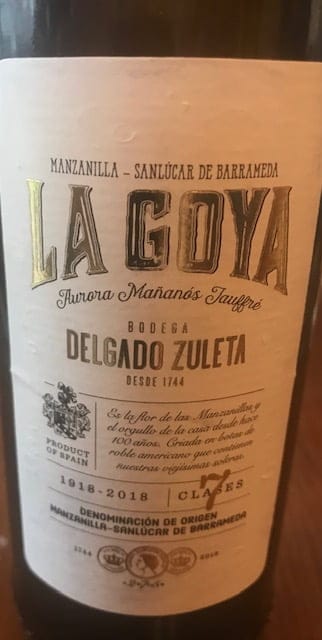
Possibly, our longing for nostalgia led to a recent meal that featured a world-famous Sherry’. That is to say the marvellous Delgado Zuleta “La Goya” Manzanilla Fino Sherry. This we enjoyed at the Legends Lunch at the Woods restaurant a few weeks ago.

It was obtained by Richard Friend and our leader Ian Napier and came in half bottles. Richard explained it is most important it be consumed relatively fresh – within a year of bottling and a day or two after opening. The half bottles help ensure no wine is left in the bottle!
After eight years in the barrel, it is bottled before the flor yeast dies off avoiding any marked oxidative or Amontillado characters can form. Made from white Palomino grapes grown near Sanlucar, a relatively cool, humid seaside area, it takes on a tang of the sea with a suggestion of chamomile flower or very slightly apple character (Manzanilla being Spanish for Camomile or apple). It has an oyster or abalone scent with a hint of chalky lime reflecting the soil in which it is grown. ( NB goes well with Caviar and oysters)
As the Palomino grape is fairly bland in flavor, the process of wine-making, the site of the wine house – the bodega, the length of time in barrel, the addition of neutral grape spirit, the maintenance of a flor throughout the process all impact on the style of wine produced.
To me of interest is the impact of the sighting of the bodega as an important factor in the production of sherry. The long time in barrel with about 20% air space or ullage above the wine allows a subtle influence of the air surrounding the bodega to occur. The flor, of course, grows on top of the wine and protects it from oxidation but depending on the style this does not always remain intact. Some sherries are fortified with natural grape spirit strong enough to kill the yeast and encourage oxidation and a greater influence from the atmosphere.
We can define sherry basically as a blended and fortified wine, made from grapes and in the bodegas of the district centred on Jerez-de-la-Frontera, found in the province of Andalusia, southwest Spain not far from the harbour of Cadiz.
The name Jerez-Xerez-Scheris (Spanish-French-Moorish) has been anglicized into the English Sherry. The region has been growing grapes and making wine from Roman times.
The Roman writer Columella, from Cadiz, wrote in the first century about boiling down the grape must into sapa and defrutum to add to wine to sweeten it. This technique has been used throughout the centuries and is still used today in the making of some Sherries. This technique continued during the dark ages with the Vandal or Hunish domination, not being lost as in other parts of Europe.
Even during the occupation by the Moores, the grapes were still grown for their fruit and the must boiled to provide sweetness well before sugar became available. In addition, the Moores conveyed their knowledge of distillation. Used not for alcohol concentration but for making perfume from distilling the sap and essence of flowers.
In 1264 Alfonso X liberated Jerez from the Moores and it became the frontier of Christendom -Jerez-de-la-Frontera. Now with the know-how of both winemaking and distillation, it wasn’t long before the ancient Roman tradition of fortifying wine to enable ageing and transport was rediscovered.
In 1492 not only did Columbus sail the ocean blue but Granada fell to Ferdinand and Isabella and the Moores finally departed Spain. This freed up Jerez from military duties and led to the expansion of the wine trade. In particular, with Catherine of Aragon marrying Henry VIII of England special privileges were given to English merchants who came to Jerez and Seville to buy wines for import.
From the special Privileges granted in 1517, it is possible to trace the origin of the wine called Sack from Jerez, “these were natural wines, not exceptionally dry, but very much drier than the sweet or sweetened which had hitherto been imported from Spain”, the name possibly derived from the Spanish ‘seco’(dry). However, Sack became a more generic name for a variety of wines often sweetened and highly fortified for the English market.
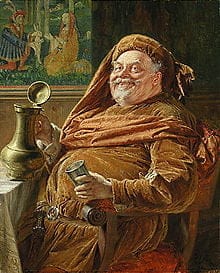 At one stage it was thought the name Sack derived from the sacking of Cadiz in 1596 which followed the attack by Sir Francis Drake in 1587 that delayed the Armada. Drake certainly took a large amount of wine back with him and helped popularize it among the English people. Indeed Shakespeare by 1597 had Falstaff drinking “a good sherris-sack” which “ascends me into the brain…and warms the blood”. Interesting that he qualified the sack with the term sherris as by then many sweet, fortified wines from Spain and the Canary Island, including Rumneys, were called sack.
Following the Napoleonic wars, the Spanish wine trade recovered and was exporting the same style of sweetened fortified wines unimpeded by the “flower”, as determined by the merchants, and as it had done for centuries. The locals preferred interestingly the light dry wines that developed under the flor.
In 1831, as the history of the Gonzalez-Byass records, James Busby visited ‘Xerez’ and approved of the local “vin du pays -Manzanilla, a wine preferred to all other wine by people of all ranks”. He described it as “ a light pleasant beverage, having at the same time a mellowness and flavor”. He did not doubt that “after a little habit” it would appeal to the English taste.
The gem of an idea took hold and by 1858 the first Finos and Manzanillas were exported from Spain to England and the Sherry trade bloomed. Enjoyed as an aperitif it opened a new era of blending and the recognition of the importance place and matching the style of these lighter wines to an appropriate degree of fortification.
There is so much more to the story of Sherry-for instance Bristol Cream a well known and popular style is said to have been fined with milk before blending giving it a creamy palate. More possibly for another day but the Manzanilla “La Goya” which started our lunch certainly sparked a lot of interest.
I have used the following in preparing this blog
Sherry and Port; H. Warner Allen, Constable, London 1952
The story of wine; Hugh Johnson, Mandarin, London 1992
Journal of a Tour; James Busby Stephens and Stokes, Sydney 1833
#aroundhermitage#huntervalley#bobsblog
Author: Robert Lusby AM
#tintillaestate
©Around Hermitage Association
Planning a Wine and Food Dinner; the proof of the pudding… Bob’s Blog
“Just wondering if you can do the next dinner, the rest of the year is taken but you missed the Christmas dinner and there is just one spot left – February.” An offer I couldn’t refuse!
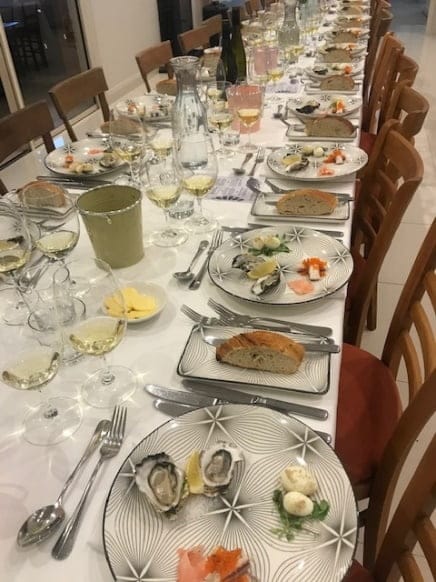
Like many of our friends in Pokolbin Wine Country, we have been involved in planning such dinners for years and the trick is to make them interesting. A wine region or a food-based theme, a travel-related or grape varietal based topic, something to help make it memorable.
 With the raging bush fires (in other regions) at present, I ruled out Fumé Blanc wines straight away! We are all on edge hoping not to get any smoke taint on our grapes as we are just about to start picking.
Important in these dinners is the discussions that occur and knowledge shared not only about the wines and food but what is going on in our wine-growing district. At a critical time as this, the bushfires and what to do top the list of issues discussed.
By mid-February, we hopefully will be all picked and can relax a little. Too hot for any heavy reds so I have paid a visit to my cellar and found some Pinot Noir of interest plus some other similar weighted reds…I don’t want to give too much away just yet. The whites will be some aged Semillon plus other interesting similar styled wines. We usually start with some cold sparkling wines, so from two regions, I have that covered and an interesting white fortified to finish with.
Now for the food matching.
Food like wine is such an individual thing and really today there are only a few guiding rules when it comes to matching. The permutations and combinations are endless.
Gone are the days when Semillon is matched with oysters as a rule, white wine with white meat – say chicken and reds with red meat. That existed in the day when sherry was served before the meal. When I was working in the UK only the women got sherry the men drank scotch or gin (not to be wasted on the women!!!)
There was a period of total freedom “drink what you like with anything” was the go. Such a waste when good wine was spoilt when mismatched and visa versa. We, fortunately, have moved on from that.
So the trick is to try and bring the best out of the combination and this may take a little experimentation. With 25 people we are not going into too much depth with outstanding wines but good solid representative examples are to be served. The food needs to be able to carry and match the weight and not detract from the wines. I have in mind the food and wine matches but will need to have a quiet dinner at the restaurant beforehand, just to check. Dam.
The delicacy, strength and robustness of both the food and wine have to be considered. As Len Evans remarked “A light delicate white with a great beef stew would merely be mouthwash”.
With the wines, of course, dry before sweet and white before red is a given. It is important not to assume a wine is dry or sweet unless you know the producer well. At a recent dinner meeting of one group, three Zinfandels were served, all lovely examples however the middle one was almost port-like in its sweetness, very surprising. A good story behind its character made it interesting but possibly should have been last in the lineup. Best also to taste the wines before serving to make last-minute changes in the order of presentation.
The volume of wine consumed is modest at these functions. Generally, we get about 12 glasses to the bottle and we have four glasses with the entrée and four with the main. With the sparkling beforehand and a small serving of a fortified to finish just under a bottle per person is consumed. This then places the emphasis on the discussions, the memories of past vintages, the regional characteristics, the winemaking approaches, how the wine is travelling, the food itself and how it was prepared as well as how well it went with the wine and other related matters.
Now one critical issue for me is what to serve with dessert. Often a sweet table wine or fortified wine is brought out and enjoyed. I, on the other hand, prefer a dry sparkling wine with a sweet dessert. The sweet or fortified I believe is better suited to have with cheese. That, of course, opens a whole new field of enjoyment.
In the English tradition, Stilton cheese goes so well with a port wine style and in a similar way an Italian Gorgonzola with a twany or white port style. Some would prefer an older Hunter or Coonawarra Cabernet with the stronger blue cheeses and we often do this at our Legends wine lunches.
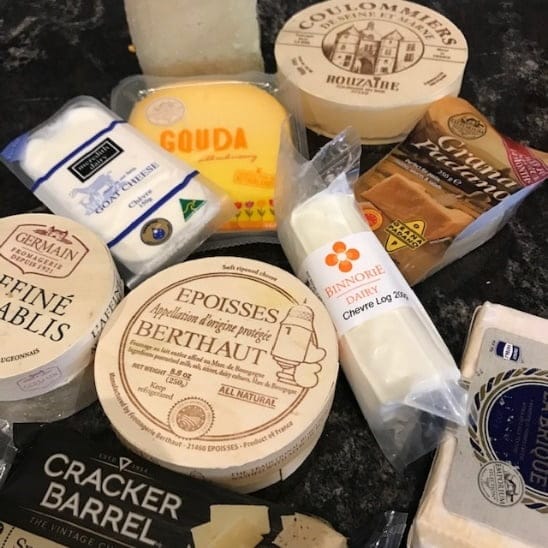 When it comes to pairing wine and cheese I have often been disappointed at dinners, lunches, and parties. The anything-goes principle can spoil both the taste of the cheese and enjoyment of the wine.
Just like food matching, in general, we should pair wines with cheeses of equal strength and intensity. So starting off with a sparkling wine, I think we should look for soft, creamy cheeses. How fortunate are we in the Hunter to have great examples from Hunter Belle and Binorie to choose from, not to forget the long-established Hunter Valley Cheese Factory. Brie, Camembert or Epoisses de Bourgogne are the classics of course. Pinot Noir and Beaujolais go well with these styles also.
Will Sauvignon Blanc ever recover from Len Evans comparing it to cats pee? In any event goats cheese and Feta with a good wine and garlic and herb flavoured if you want to mask the feline effect.
Being a producer of Sangiovese its interesting to see how well the Italian Parmigiano Reggiano and Pecorino go with this Chanti style wine. Something to do with the terroir maybe. Similarly, Manchego, that famous sheep milk cheese of Spain, matches the Rioja or Tempranillo wines.
We like to sit down with a good Hunter Shiraz and a cheddar with a bit of bite, and we vary the cheese with a Gouda, Edam and occasionally an overripe soft cheese dripping off the bread. If in the mood or depending what’s at hand a Cabernet, Cabernet Merlot or Merlot go well. Bearing in mind bold and aged reds pair best with aged cheeses. The fat content is enhanced as the cheese loses moisture which then balances out the tannins in the wine, allowing the wine to just slip down without any trouble!.
I could fill a whole blog on wine and cheese pairing and still not cover the topic fully. How fortunate we are to have so much choice and ability to express our individuality through food and wine.
The closure of a dinner is just as important as the opening and there are many ways to wind up the evening leaving everyone satisfied. I enjoy a coffee with a little milk and a dash of Cognac some prefer a Scotch others a fortified wine, no matter what if the conversations have been good and the culinary matching worked we will do it again.
I have used Cellarmaster’s Guide to Australian Wines by Len Evans in writing this Blog.
#aroundhermitage #huntervalley #bobsblog #tintillaestate
Author: Robert Lusby AM
©Around Hermitage Association