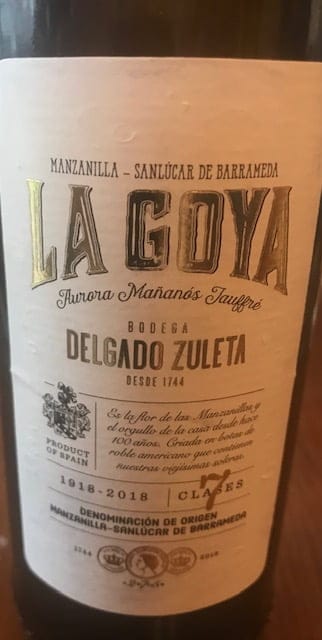
 We have moved on from that time and yet there are some interesting connections associated with wine of the past. I will come to the important Hunter connection to this ancient wine-producing region and its more modern aperitif style wine later.
Sherry was the standard aperitif when I was a lad and when working in the UK years ago, it was always offered to the woman while the real men drank Scotch!
We have moved on from that time and yet there are some interesting connections associated with wine of the past. I will come to the important Hunter connection to this ancient wine-producing region and its more modern aperitif style wine later.
Possibly, our longing for nostalgia led to a recent meal that featured a world-famous Sherry’. That is to say the marvellous Delgado Zuleta “La Goya” Manzanilla Fino Sherry. This we enjoyed at the Legends Lunch at the Woods restaurant a few weeks ago.

It was obtained by Richard Friend and our leader Ian Napier and came in half bottles. Richard explained it is most important it be consumed relatively fresh – within a year of bottling and a day or two after opening. The half bottles help ensure no wine is left in the bottle!
After eight years in the barrel, it is bottled before the flor yeast dies off avoiding any marked oxidative or Amontillado characters can form. Made from white Palomino grapes grown near Sanlucar, a relatively cool, humid seaside area, it takes on a tang of the sea with a suggestion of chamomile flower or very slightly apple character (Manzanilla being Spanish for Camomile or apple). It has an oyster or abalone scent with a hint of chalky lime reflecting the soil in which it is grown. ( NB goes well with Caviar and oysters)
As the Palomino grape is fairly bland in flavor, the process of wine-making, the site of the wine house – the bodega, the length of time in barrel, the addition of neutral grape spirit, the maintenance of a flor throughout the process all impact on the style of wine produced.
To me of interest is the impact of the sighting of the bodega as an important factor in the production of sherry. The long time in barrel with about 20% air space or ullage above the wine allows a subtle influence of the air surrounding the bodega to occur. The flor, of course, grows on top of the wine and protects it from oxidation but depending on the style this does not always remain intact. Some sherries are fortified with natural grape spirit strong enough to kill the yeast and encourage oxidation and a greater influence from the atmosphere.
We can define sherry basically as a blended and fortified wine, made from grapes and in the bodegas of the district centred on Jerez-de-la-Frontera, found in the province of Andalusia, southwest Spain not far from the harbour of Cadiz.
The name Jerez-Xerez-Scheris (Spanish-French-Moorish) has been anglicized into the English Sherry. The region has been growing grapes and making wine from Roman times.
The Roman writer Columella, from Cadiz, wrote in the first century about boiling down the grape must into sapa and defrutum to add to wine to sweeten it. This technique has been used throughout the centuries and is still used today in the making of some Sherries. This technique continued during the dark ages with the Vandal or Hunish domination, not being lost as in other parts of Europe.
Even during the occupation by the Moores, the grapes were still grown for their fruit and the must boiled to provide sweetness well before sugar became available. In addition, the Moores conveyed their knowledge of distillation. Used not for alcohol concentration but for making perfume from distilling the sap and essence of flowers.
In 1264 Alfonso X liberated Jerez from the Moores and it became the frontier of Christendom -Jerez-de-la-Frontera. Now with the know-how of both winemaking and distillation, it wasn’t long before the ancient Roman tradition of fortifying wine to enable ageing and transport was rediscovered.
In 1492 not only did Columbus sail the ocean blue but Granada fell to Ferdinand and Isabella and the Moores finally departed Spain. This freed up Jerez from military duties and led to the expansion of the wine trade. In particular, with Catherine of Aragon marrying Henry VIII of England special privileges were given to English merchants who came to Jerez and Seville to buy wines for import.
From the special Privileges granted in 1517, it is possible to trace the origin of the wine called Sack from Jerez, “these were natural wines, not exceptionally dry, but very much drier than the sweet or sweetened which had hitherto been imported from Spain”, the name possibly derived from the Spanish ‘seco’(dry). However, Sack became a more generic name for a variety of wines often sweetened and highly fortified for the English market.
 At one stage it was thought the name Sack derived from the sacking of Cadiz in 1596 which followed the attack by Sir Francis Drake in 1587 that delayed the Armada. Drake certainly took a large amount of wine back with him and helped popularize it among the English people. Indeed Shakespeare by 1597 had Falstaff drinking “a good sherris-sack” which “ascends me into the brain…and warms the blood”. Interesting that he qualified the sack with the term sherris as by then many sweet, fortified wines from Spain and the Canary Island, including Rumneys, were called sack.
Following the Napoleonic wars, the Spanish wine trade recovered and was exporting the same style of sweetened fortified wines unimpeded by the “flower”, as determined by the merchants, and as it had done for centuries. The locals preferred interestingly the light dry wines that developed under the flor.
In 1831, as the history of the Gonzalez-Byass records, James Busby visited ‘Xerez’ and approved of the local “vin du pays -Manzanilla, a wine preferred to all other wine by people of all ranks”. He described it as “ a light pleasant beverage, having at the same time a mellowness and flavor”. He did not doubt that “after a little habit” it would appeal to the English taste.
The gem of an idea took hold and by 1858 the first Finos and Manzanillas were exported from Spain to England and the Sherry trade bloomed. Enjoyed as an aperitif it opened a new era of blending and the recognition of the importance place and matching the style of these lighter wines to an appropriate degree of fortification.
There is so much more to the story of Sherry-for instance Bristol Cream a well known and popular style is said to have been fined with milk before blending giving it a creamy palate. More possibly for another day but the Manzanilla “La Goya” which started our lunch certainly sparked a lot of interest.
I have used the following in preparing this blog
Sherry and Port; H. Warner Allen, Constable, London 1952
The story of wine; Hugh Johnson, Mandarin, London 1992
Journal of a Tour; James Busby Stephens and Stokes, Sydney 1833
#aroundhermitage#huntervalley#bobsblog
Author: Robert Lusby AM
#tintillaestate
©Around Hermitage Association
Meet the Makers – Darren and Tracey – RidgeView Wines
Little Patch of Dirt Becomes Family’s Passion
February 14, 2020 WORDS Michelle Meehan
It’s been three decades since Darren and Tracey Scott started coming to the Hunter Valley to indulge in their passion for wine tasting, and 20 years since they decided to create their own.
But after buying a picturesque 40-acre Pokolbin property in 2000, they have worked tirelessly to create one of the Hunter’s premium boutique wine, food and accommodation destinations – RidgeView. Establishing a wine label from scratch is not exactly an easy enterprise, especially when you’re squeezing it in between working your day job as a dentist (Darren) and raising a family of four young children.
Not surprisingly, it’s been a long road for the Scotts, both in the daunting number of kilometres they have travelled over the years from their family home in Sydney to their burgeoning enterprise in the Hunter, and the massive transformations that have been wrought on their “little patch of dirt”.
“We haven’t moved to the Hunter, but rather made the Hunter our second home (for now),” Darren said.
“My wife and I have always had a passion for wine and frequently travelled to the Valley during the late 80’s and 90’s.
“When we established our brood of four, we decided in 2000 to buy a patch of dirt.
“The biggest challenge in the early years was time… everything takes much longer than you expect, especially when it is a part-time gig trying to build and establish a vineyard.”
The “building” process began soon after the Scotts took ownership of ‘Ironbark Estate’ as it was known at the time, renaming it ‘RidgeView’ in honour of the property’s spectacular views and its location on one of the highest points in Sweetwater Ridge Estate.
With the support of a group of close friends, the Scotts embarked on the daunting task of transforming the 40-hectare timber property into a vineyard with 22 acres of selected vines, four self-contained cottages as well as a cellar door and restaurant.
The process of preparing the soil, planting, training and pruning vines during that first year showed the Scotts just how much hard work was going to be required to turn their dream into a reality.
But the toughness of the task failed to dampen their enthusiasm for the end goal, and by 2001 they had established a 22-acre (nine-hectare) vineyard and built the first two of what would eventually be four tranquil self-contained cottages.
In the years that followed, they continued to develop and expand their operations on the site, with further infrastructure established before the sparkling in-ground swimming pool was put in for use by guests in 2004.
The destinations’ recreational credentials continued to expand the following year, with guests gaining the option to relax with a spot of tennis on-site before further vineyards were established in 2006 and the remaining two cottages were added between 2007 and 2008.
Production of the first few vintages of RidgeView wines was well underway by this time, although the start to the whole winemaking process was less than ideal.
The first Shiraz and Chambourcin grapes were harvested from the vines in 2004, with the wet vintage forcing them to hand-pick and transport all the fruit from the vineyard as the ground was too soggy to use tractors.
When harvest rolled around in 2005 following a hot, dry summer that ripened the fruit to perfection, Ridgeview’s vineyard was nearly at full production, with Merlot, Cabernet Sauvignon, Semillon, Verdelho and Chardonnay joining their original Shiraz and Chambourcin grapes.
New varieties continued to be added to the mix in the following years with the aim of producing premium, 100 per cent Hunter Valley wines that are approachable while young, yet develop character with careful cellaring.
That aim was soon earning RidgeView plenty of positive feedback on the wine show circuit, with their 2006 “Generations” Reserve Shiraz being awarded Best Young Shiraz at the 2009 NSW Wine Awards.
RidgeView’s wines have continued to earn industry distinction over the years, making an impression on everyone from industry show judges to esteemed wine critics such as James Halliday.
Darren said two main elements set RidgeView wines apart – their strong terroir, as well as the commitment to chemical-free production processes.
“We make wines from seven varieties including Pinot Gris and our wines are very much ‘Hunter Valley’,” Darren said.
“As James Halliday says, our 2017 Impressions Shiraz ‘screams Hunter’.
“Great wines ultimately come from great vineyards. We believe that the wines we make are reflective of the preparation made to the soils and the viticultural practices carried out in the vineyard, with attention given to Integrated Pest Management (IPM).
“This means no unnecessary spraying against pests and diseases.
“There is a natural biodiversity within the vineyard, and this is reflected in the quality of the fruit and the resultant wines.
“We have won over 700 medals and more than 20 trophies for our wines.”
“For example, the 2019 Hunter Valley Boutique Wine Show results were five trophies for four wines, including ‘Best Classic Hunter Valley Red’ for 2017 Impressions Shiraz.
“We also won numerous gold, silver and bronze medals.”
In 2010 RidgeView achieved another milestone when the property’s stunning new cellar door and 110-seat restaurant were opened.
Ideally positioned to make the most of the views over Little Gully Vineyard running up the ridge, the cellar door and restaurant were faultlessly designed, with the building making clever use of space, light and materials to maximise the enjoyment offered by its marvellous location.
The perfect addition to any wine tasting tour, RidgeView has become a popular dining destination and wedding venue, with the family-orientated restaurant considered one of the best in the Hunter Valley.
Favoured by locals and visitors with its emphasis on fresh seasonal local produce, a strong Mediterranean influence and carefully-selected food and wine pairing, the restaurant is run by a passionate and driven team.
The restaurant’s seasonal menu is designed to make use of their on-site herb and vegetable garden and to entice the senses and enhance the flavour of their wines.
For those who want to savour the RidgeView experience beyond their meal at the restaurant or tasting experience at the cellar door, the estate’s four gorgeous guest cottages provide a secluded oasis to escape and unwind.
Nestled amongst majestic spotted gums and ironbark trees, and overlooking waterways surrounded by natural bushland and vineyard views, the cottages offer a luxurious range of self-contained accommodation, beautifully completed by RidgeView’s private guest facilities including the award-winning “infinity edge” swimming pool and tennis court.
Perfectly spaced to give the guests of each cottage plenty of privacy, they include two king-sized one-bedroom cottages and two queen-sized two-bedroom cottages, which also feature a second bathroom each.
Tastefully appointed with great attention to detail, the self-contained accommodation features complete kitchens and undercover outdoor dining areas with barbecues, allowing you to make the most of the spectacular surrounds at every opportunity.
Perfect for a romantic weekend away, all four cottages have indoor spa baths and large two-person showers, while the luxurious king bedroom cottages also have an outdoor, undercover jacuzzi and sauna on the wraparound verandah.
As a family-owned venue, it’s little wonder that RidgeView is an ideal destination for both young and old, with special events planned throughout the year that will keep the little ones happy while their parents indulge in some of the winery’s over-18 offerings. Upcoming events include a Kids’ Egg Hunt from 3pm on Easter Saturday (April 18), as well as a Kids’ Fun Day from 11am to 3pm on the Sunday of the June long weekend (June 7), featuring a petting zoo; kids eat free offer and more.
Darren said family has always been at the heart of the venture, and he and Tracey are proud to have watched their four children, who were aged between five and 11 years when they bought the property, grow alongside and take a hands-on role in the development of RidgeView.
“There have been lots of proud moments over the years, but too many to mention,” he said.
“I feel that all four of Tracey and my children being married and having their reception at RidgeView over the past nine years is very special.
“The early days when all the extended family would come from interstate and intrastate for the June long weekend Billy Cart competition was also very special.
“I still practice dentistry in Sydney and my son joined me in the practice more than three years ago. He is a keen farmer and is up every weekend working in the restaurant kitchen garden.
“The key to our success over the years has been the support of my wife, children and extended family, as well as hard work and determination-plus to make a mark and promote the region.”
WHERE 273 Sweetwater Rd, Pokolbin NSW 2320
PHONE 02 6574 7332
FACEBOOK RidgeView.Hunter
INSTAGRAM ridgeview_huntervalley
www.ridgeview.com.au
Article from Your Hunter Valley Magazine
Planning a Wine and Food Dinner; the proof of the pudding… Bob’s Blog
“Just wondering if you can do the next dinner, the rest of the year is taken but you missed the Christmas dinner and there is just one spot left – February.” An offer I couldn’t refuse!
Like many of our friends in Pokolbin Wine Country, we have been involved in planning such dinners for years and the trick is to make them interesting. A wine region or a food-based theme, a travel-related or grape varietal based topic, something to help make it memorable.
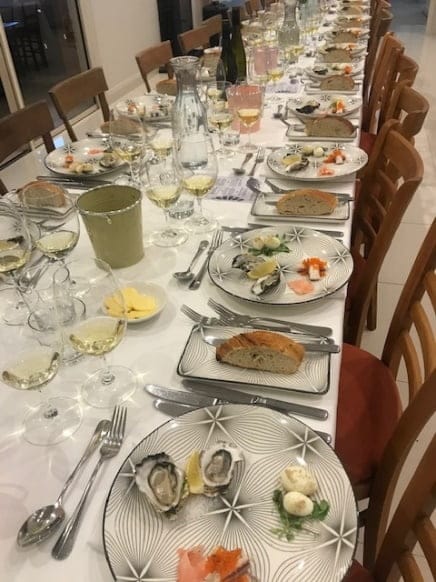 With the raging bush fires (in other regions) at present, I ruled out Fumé Blanc wines straight away! We are all on edge hoping not to get any smoke taint on our grapes as we are just about to start picking.
Important in these dinners is the discussions that occur and knowledge shared not only about the wines and food but what is going on in our wine-growing district. At a critical time as this, the bushfires and what to do top the list of issues discussed.
By mid-February, we hopefully will be all picked and can relax a little. Too hot for any heavy reds so I have paid a visit to my cellar and found some Pinot Noir of interest plus some other similar weighted reds…I don’t want to give too much away just yet. The whites will be some aged Semillon plus other interesting similar styled wines. We usually start with some cold sparkling wines, so from two regions, I have that covered and an interesting white fortified to finish with.
Now for the food matching.
Food like wine is such an individual thing and really today there are only a few guiding rules when it comes to matching. The permutations and combinations are endless.
Gone are the days when Semillon is matched with oysters as a rule, white wine with white meat – say chicken and reds with red meat. That existed in the day when sherry was served before the meal. When I was working in the UK only the women got sherry the men drank scotch or gin (not to be wasted on the women!!!)
There was a period of total freedom “drink what you like with anything” was the go. Such a waste when good wine was spoilt when mismatched and visa versa. We, fortunately, have moved on from that.
So the trick is to try and bring the best out of the combination and this may take a little experimentation. With 25 people we are not going into too much depth with outstanding wines but good solid representative examples are to be served. The food needs to be able to carry and match the weight and not detract from the wines. I have in mind the food and wine matches but will need to have a quiet dinner at the restaurant beforehand, just to check. Dam.
The delicacy, strength and robustness of both the food and wine have to be considered. As Len Evans remarked “A light delicate white with a great beef stew would merely be mouthwash”.
With the wines, of course, dry before sweet and white before red is a given. It is important not to assume a wine is dry or sweet unless you know the producer well. At a recent dinner meeting of one group, three Zinfandels were served, all lovely examples however the middle one was almost port-like in its sweetness, very surprising. A good story behind its character made it interesting but possibly should have been last in the lineup. Best also to taste the wines before serving to make last-minute changes in the order of presentation.
The volume of wine consumed is modest at these functions. Generally, we get about 12 glasses to the bottle and we have four glasses with the entrée and four with the main. With the sparkling beforehand and a small serving of a fortified to finish just under a bottle per person is consumed. This then places the emphasis on the discussions, the memories of past vintages, the regional characteristics, the winemaking approaches, how the wine is travelling, the food itself and how it was prepared as well as how well it went with the wine and other related matters.
Now one critical issue for me is what to serve with dessert. Often a sweet table wine or fortified wine is brought out and enjoyed. I, on the other hand, prefer a dry sparkling wine with a sweet dessert. The sweet or fortified I believe is better suited to have with cheese. That, of course, opens a whole new field of enjoyment.
In the English tradition, Stilton cheese goes so well with a port wine style and in a similar way an Italian Gorgonzola with a twany or white port style. Some would prefer an older Hunter or Coonawarra Cabernet with the stronger blue cheeses and we often do this at our Legends wine lunches.
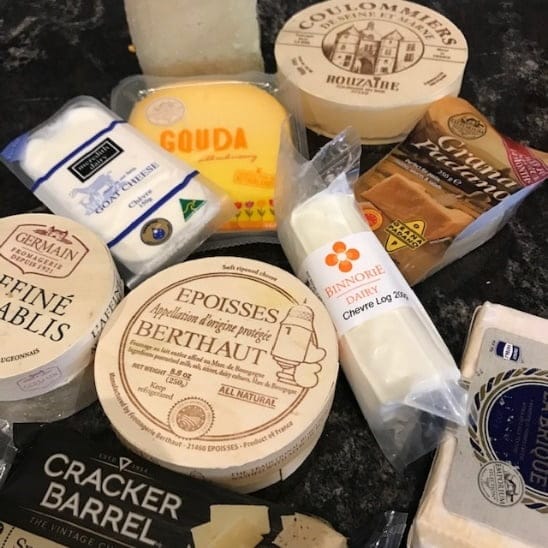 When it comes to pairing wine and cheese I have often been disappointed at dinners, lunches, and parties. The anything-goes principle can spoil both the taste of the cheese and enjoyment of the wine.
Just like food matching, in general, we should pair wines with cheeses of equal strength and intensity. So starting off with a sparkling wine, I think we should look for soft, creamy cheeses. How fortunate are we in the Hunter to have great examples from Hunter Belle and Binorie to choose from, not to forget the long-established Hunter Valley Cheese Factory. Brie, Camembert or Epoisses de Bourgogne are the classics of course. Pinot Noir and Beaujolais go well with these styles also.
Will Sauvignon Blanc ever recover from Len Evans comparing it to cats pee? In any event goats cheese and Feta with a good wine and garlic and herb flavoured if you want to mask the feline effect.
Being a producer of Sangiovese its interesting to see how well the Italian Parmigiano Reggiano and Pecorino go with this Chanti style wine. Something to do with the terroir maybe. Similarly, Manchego, that famous sheep milk cheese of Spain, matches the Rioja or Tempranillo wines.
We like to sit down with a good Hunter Shiraz and a cheddar with a bit of bite, and we vary the cheese with a Gouda, Edam and occasionally an overripe soft cheese dripping off the bread. If in the mood or depending what’s at hand a Cabernet, Cabernet Merlot or Merlot go well. Bearing in mind bold and aged reds pair best with aged cheeses. The fat content is enhanced as the cheese loses moisture which then balances out the tannins in the wine, allowing the wine to just slip down without any trouble!.
I could fill a whole blog on wine and cheese pairing and still not cover the topic fully. How fortunate we are to have so much choice and ability to express our individuality through food and wine.
The closure of a dinner is just as important as the opening and there are many ways to wind up the evening leaving everyone satisfied. I enjoy a coffee with a little milk and a dash of Cognac some prefer a Scotch others a fortified wine, no matter what if the conversations have been good and the culinary matching worked we will do it again.
I have used Cellarmaster’s Guide to Australian Wines by Len Evans in writing this Blog.
#aroundhermitage #huntervalley #bobsblog #tintillaestate
Author: Robert Lusby AM
©Around Hermitage Association
Amber LeBeau – SpitBucket